
A frozen AC unit in summer usually means the system is not moving heat the way it should. The cause may be restricted airflow, dirty coils, poor maintenance, refrigerant-related trouble, or another cooling issue that needs professional diagnosis.
It feels backward. The house is warm, the weather is humid, and the air conditioner has ice on it. But a frozen air conditioner is not “extra cold.” It is usually a sign that the cooling cycle is struggling.
Haller provides air conditioning repair in Pennsylvania, including support for systems that are struggling to keep up, making strange noises, or not turning on.
Why does an AC freeze up in summer?
An AC can freeze up in summer when airflow, coil condition, or refrigerant-related conditions prevent normal heat transfer. The U.S. Department of Energy explains that an evaporator coil absorbs heat from indoor air, while the condenser releases heat outside.
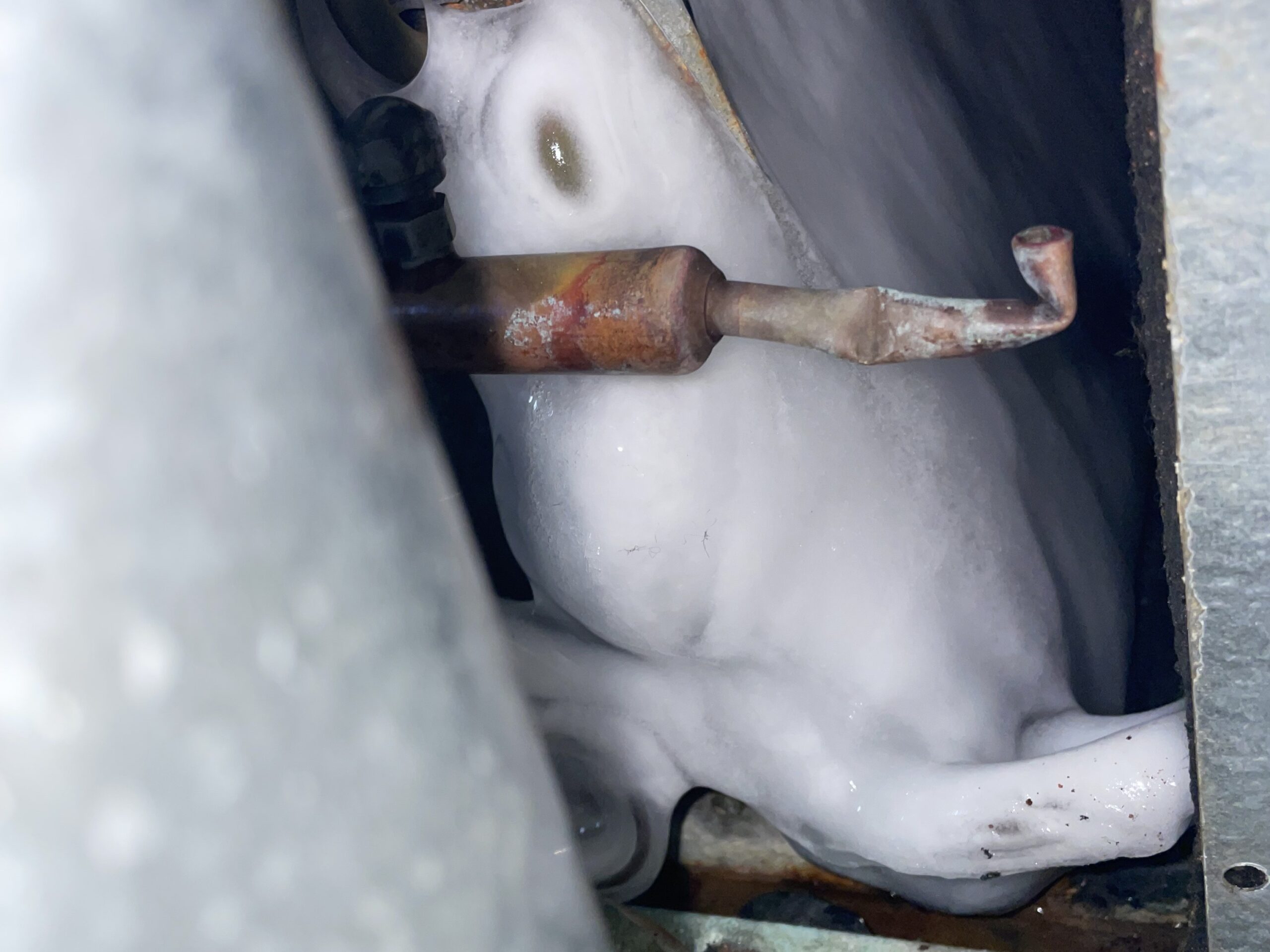
When the indoor coil gets too cold, moisture can freeze on the coil or refrigerant line.
Common causes include:
- A dirty air filter
- Closed or blocked vents
- Dirty evaporator or condenser coils
- Weak blower airflow
- Refrigerant-related problems
- Poor maintenance
- Duct restrictions
- Running the system while airflow is already weak
- A thermostat or control issue
In short, AC freezing up is usually a performance problem, not a sign that the system is cooling better.
What signs mean your HVAC system needs attention?
Your HVAC system needs attention when you see ice, weak airflow, warm air, water near the indoor unit, or repeated freezing after thawing.
Watch for these signs:
- Ice on the refrigerant line
Ice may form on the copper line near the outdoor unit or indoor coil. - Weak airflow
Low airflow can reduce heat transfer across the indoor coil. - Warm air from vents
A frozen coil can block normal cooling even while the system runs. - Water near the indoor unit
Melting ice may create water around the air handler or drain area. - Longer run times
Dirty coils can reduce the system’s ability to cool, make the system run longer, increase energy costs, and reduce equipment life. - Ice returns after thawing
If ice comes back, the root issue has not been corrected.
If your AC keeps freezing, it needs more than another thermostat adjustment. Schedule service with Haller today
What can you safely check before calling?
You can safely turn cooling off, check the filter, open vents, inspect visible airflow paths, and make sure the outdoor unit has clear space around it. Do not chip ice off the coil, open sealed panels, or handle refrigerant.
Use this safe checklist:
- Turn cooling off. Let the system thaw before using cooling again.
- Use fan-only mode if available. This may help move air across the coil.
- Check the filter. Replace a dirty filter before restarting cooling.
- Open supply and return vents. Blocked vents can reduce airflow.
- Look around the outdoor unit. Clear visible leaves or debris without removing panels.
- Watch for water. Melting ice can overflow if the drain is blocked.
- Avoid sharp tools. Do not scrape or chip ice from the coil.
Safety note: Refrigerant level, coil cleaning, electrical controls, and blower testing are professional service items. ENERGY STAR recommends cleaning evaporator and condenser coils and checking central AC refrigerant level as part of maintenance.
Explore AC maintenance service or maintenance plan options before peak summer demand if your system has been freezing, running longer, or cooling unevenly.
Make Maintenance Easier with Haller’s Home Comfort Club
Routine cooling maintenance can help your system operate more efficiently and reduce the chance of an unexpected problem during hot weather.
Through Haller’s Home Comfort Club, members receive pre-scheduled maintenance visits, savings on service work, exclusive membership scheduling, whole-home coverage options, and support when issues arise.
It is a convenient way to stay ahead of care for your air conditioner, heat pump, and other essential home systems while helping protect comfort and equipment performance.
When should you call a professional?
You should call a professional when the AC freezes again after safe checks, airflow stays weak, water appears near the unit, or cooling does not return after thawing.
Schedule AC repair if:
- Ice forms more than once.
- The filter is clean but airflow is still weak.
- The system runs but the home stays warm.
- Water collects near finished areas.
- You suspect a refrigerant-related issue.
- The blower sounds weak or unusual.
- The system freezes during humid summer weather.
- The frozen evaporator coil keeps returning.
That is where a licensed HVAC tech should step in.
When should you repair vs. replace?
You should repair the AC when the frozen coil comes from an isolated and correctable issue. AC replacement becomes worth discussing when freezing repeats, major parts fail, or the system no longer cools the home reliably.
A repair may fit when:
- The filter was clogged.
- A blower or airflow issue can be corrected.
- The coil needs cleaning.
- A drain or control issue caused shutdowns.
- The system has cooled well in recent seasons.
A replacement conversation may be appropriate when:
- Freezing keeps returning after service.
- The compressor is under strain.
- The system has repeated refrigerant-related problems.
- Parts availability is limited.
- Comfort is uneven across the home.
- Energy use and repair needs keep rising.
What affects HVAC cost in Pennsylvania?
HVAC repair or replacement cost in Pennsylvania depends on the cause, system access, parts, equipment type, maintenance history, and whether the issue is isolated or part of larger system wear.
Common cost drivers include:
- Cause of freezing: Filter, blower, coil, drain, and refrigerant-related problems are different scopes.
- Equipment access: Older Pennsylvania homes may have tight basements, attic air handlers, or compact utility spaces.
- System type: Central AC, heat pump, ductless, or packaged equipment can change the repair path.
- Parts: Motors, controls, coils, and compressors vary by system.
- Maintenance history: Neglected AC maintenance can reduce performance and increase energy use.
- Replacement scope: Replacement may involve sizing, ductwork, controls, or electrical work.
Avoid fixed repair claims before diagnosis. A frozen AC unit has several possible causes, and the right recommendation should come from testing the system.
Why does local Pennsylvania context matter?
Local Pennsylvania context matters because humid summers, wet springs, cold winters, and older homes can all affect AC performance. Central and Eastern Pennsylvania winters and humid summers push heating and cooling systems hard.
In Lancaster, Harrisburg, York, Allentown, and the Lehigh Valley, homes can have very different duct layouts, attic conditions, and system ages. A frozen AC unit in an older Pennsylvania home may have different contributing factors than one in a newer subdivision.
That local context matters. The issue may be a dirty filter, weak airflow, coil condition, refrigerant-related trouble, or equipment that needs a broader review.
What should you do next if your AC freezes?
If your AC freezes, turn cooling off, check the filter and vents, allow the system to thaw, and call for service if ice returns or cooling stays weak.
Here’s the plan:
- Turn cooling off.
- Run fan-only mode if available.
- Replace a dirty filter.
- Open blocked vents.
- Watch for melting water.
- Do not chip ice off the coil.
- Schedule AC repair if the system freezes again.
Schedule service with Haller today. The team can help you compare maintenance, repair, and replacement options.
Frequently Asked Questions
Why is my AC freezing up in summer?
An AC freezing up in summer usually means airflow, coil condition, refrigerant-related conditions, or maintenance issues are affecting heat transfer. An evaporator coil absorbs indoor heat, so poor heat transfer can lead to cooling problems. If ice returns after safe checks, schedule AC repair.
What should I do first when I have a frozen AC unit?
A frozen AC unit should be turned off at the cooling setting before you try to restart it. Check the filter, open vents, and allow the system to thaw. Do not chip ice from the coil. If the system freezes again, call for professional AC repair.
Can a dirty filter cause a frozen air conditioner?
A dirty filter can contribute to a frozen air conditioner by restricting airflow across the evaporator coil. The Department of Energy says regular AC maintenance includes filters, coils, fins, and refrigerant lines. Replace the filter, then schedule service if freezing continues.
Is a frozen evaporator coil an emergency?
A frozen evaporator coil can become urgent when cooling stops during high heat, water begins leaking, or ice returns after thawing.
Should I repair or replace an AC that keeps freezing?
Repairing or replacing an AC that keeps freezing depends on the cause, system age, repair history, and comfort performance. Repair may fit a filter, airflow, coil, or control issue. Replacement may be worth discussing if freezing repeats, major parts fail, or comfort keeps declining.