
Water around your indoor AC unit is easy to miss until it spreads. In many homes, the cause is not the outdoor unit or a broken pipe. It may be a clogged condensate drain line inside the cooling system.
In Pennsylvania, humid summers make air conditioners pull a lot of moisture from indoor air. Older Pennsylvania homes may also have indoor air handlers tucked into basements, closets, or attic spaces where small leaks can go unnoticed.
If your AC is leaking water, start with a few safe checks. Then call Haller for help if water keeps collecting, the system shuts off, or you see ceiling, floor, or wall damage.
Why is my AC leaking water?
Your AC may be leaking water because the condensate drain line is blocked and water cannot leave the indoor unit normally.
Here’s the simple version:
- Your AC pulls moisture out of warm indoor air.
- That moisture collects as condensation on the evaporator coil.
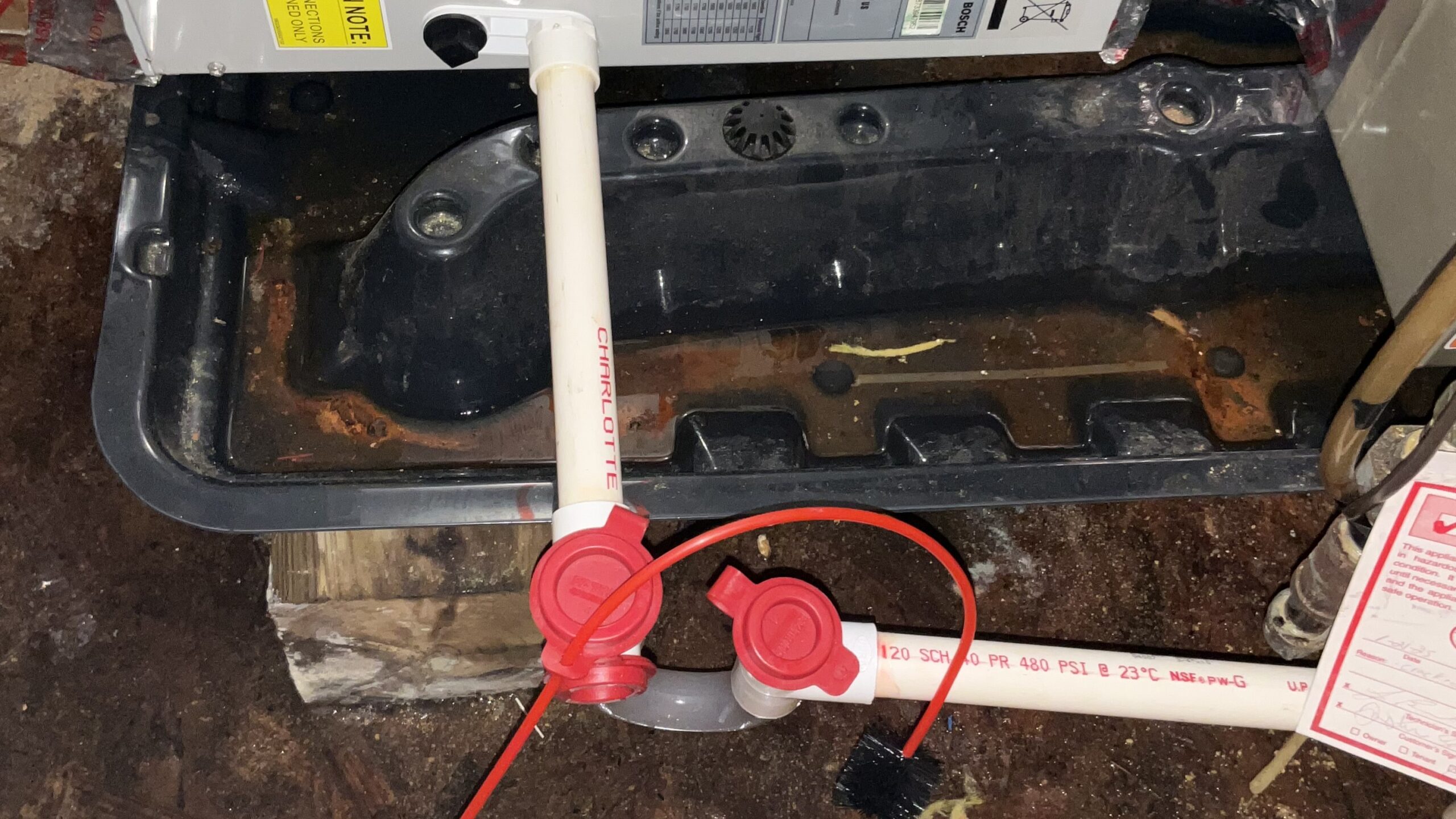
- Water moves into a drain pan.
- The condensate line carries that water away.
- If the line clogs, water can back up and leak.
That clog may come from dust, algae, mold, or other buildup that mixes with moisture inside the system. In humid Pennsylvania summers, your AC may run long enough for a small drain issue to show up as visible water near the unit.
If the leak is active, turn the cooling system off before the water spreads. Then check for the signs below.
What causes a drain line clog?
A clogged AC drain line usually starts with everyday buildup. The most common causes include:
- Dust and debris: As your AC pulls air over the evaporator coil, tiny particles like dust, dirt, and pet dander can bypass the air filter and collect in the drain pan. When they mix with condensation, they can form a thick sludge.
- Algae or mold-like growth: The inside of the drain line is dark, damp, and often warm, which can allow slimy biofilm to build up along the pipe walls.
- Layered blockages: Over time, sludge and biological growth can catch more particles until water can’t drain properly.
When the line is blocked, condensation may back up and leak around the indoor unit instead of draining safely outside.
What signs mean your AC drain line may be clogged?
The most common signs of a clogged AC drain line are standing water, musty odors, water stains, reduced cooling, or a system that shuts itself off.
Look for these symptoms:
- Water pooling near the indoor air handler
- Wet flooring around a basement or closet unit
- Ceiling stains below an attic air handler
- Musty smells from vents or near the AC
- Cooling that feels weaker than normal
- AC shutting off before it cools the home
- Water coming from a secondary drain outlet
A clogged drain line can also trigger a float switch on some systems. That switch may shut the AC down to help reduce water damage.
If you live in Lancaster, Harrisburg, York, Allentown, or another Haller service-area community, this issue often shows up when spring humidity turns into cooling-season demand.
What can you safely check before calling?
You can safely check for visible water, a dirty filter, a full drain pan, and obvious debris near the drain outlet, but avoid opening sealed equipment or forcing the line clear.
Before you do anything, use caution:
- Turn the system off if water is actively leaking.
- Check the air filter. A dirty filter can affect airflow and contribute to cooling problems.
- Look around the indoor unit. Note where the water is coming from.
- Check the drain pan if visible. Standing water may point to a blocked line.
- Look for stains. Ceiling, wall, or floor marks can show where water has traveled.
- Do not use harsh chemicals. Drain piping, pans, pumps, and nearby components can be damaged by the wrong cleaner.
Some basic drain-line maintenance may involve flushing the line or using a wet/dry vacuum at the drain exit, but professional help is recommended when clogged drain symptoms appear so the system and home are protected.
If the leak stops after a safe check, keep watching it. If it returns, schedule AC repair.
When should you call a professional for an AC water leak?
You should call a professional when water keeps pooling, the AC shuts down, odors continue, stains appear, or you are not sure where the leak starts. That’s where a pro comes in.
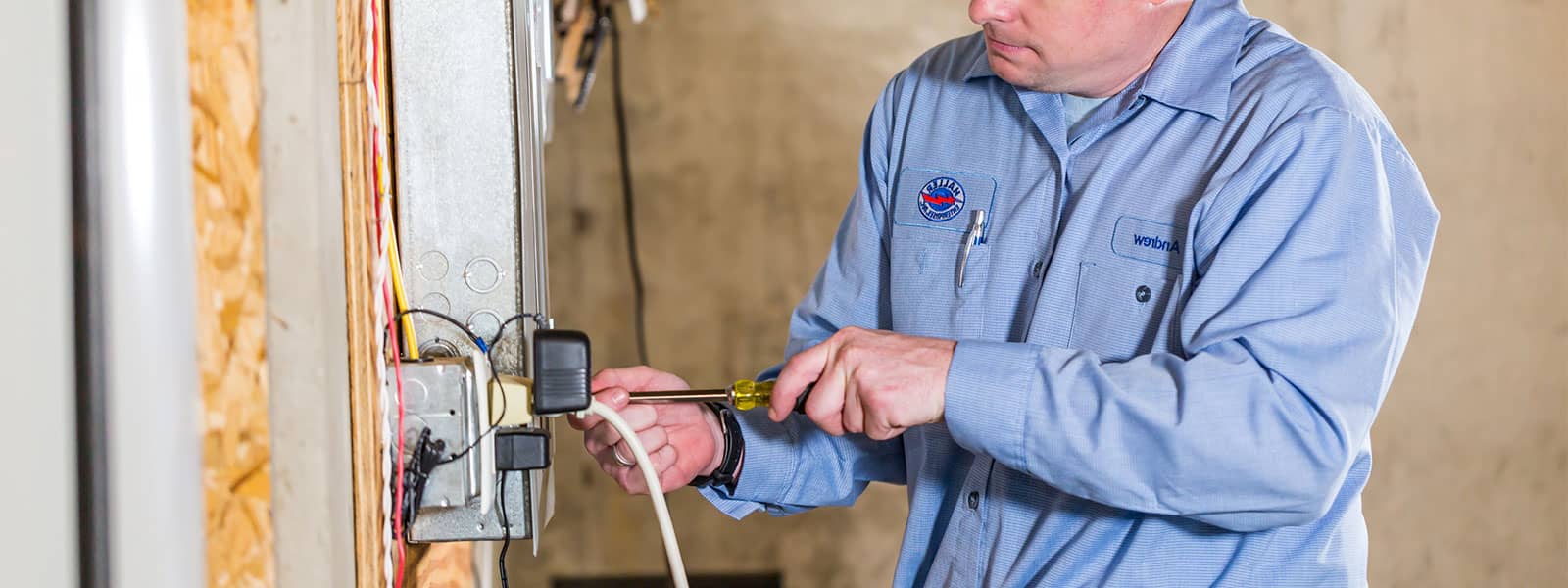
A trained HVAC technician can:
- Shut power off safely before service
- Inspect the drain pan and drain line
- Clear the blockage with proper tools
- Test water flow after clearing the line
- Check whether the evaporator coil, pump, pan, or float switch is involved
- Explain whether the issue is a repair, maintenance item, or sign of a larger AC problem
Should you repair or replace an AC that leaks water?
Most AC water leaks start as repair or maintenance issues, but AC replacement may be worth discussing if the system is older, unreliable, or showing multiple problems.
A clogged drain line by itself usually does not mean you need a new air conditioner. In many cases, the right move is to clear the line, clean the pan, test drainage, and correct the cause of buildup.
A replacement conversation may make sense when:
- The AC has repeated leak problems
- Repairs are becoming more frequent
- Cooling is weak even after maintenance
- The system has age-related wear
- The drain pan, coil, or other parts are damaged
- The home’s comfort needs have changed
Bottom line: do not assume a leak means replacement. Ask for a diagnosis first, then review the options in plain language.
What affects AC drain line repair cost in Pennsylvania?
AC drain line repair cost depends on access, clog severity, drain pan condition, system location, and whether related parts need service.
Cost drivers can include:
- Access: Attic units, tight closets, and finished basements can take more time.
- Clog location: A shallow clog may clear faster than a deep blockage.
- Water damage risk: Ceiling or flooring issues may require added care.
- Drain pan condition: Rust, cracks, or standing water may change the repair.
- Condensate pump needs: Some systems use a pump that may need testing or repair.
- Maintenance history: Systems without regular maintenance may have heavier buildup.
How can you help prevent AC drain line clogs?
You can help prevent AC drain line clogs by replacing filters, scheduling seasonal AC maintenance, watching for musty odors, and addressing small leaks early.
Helpful habits include:
- Change filters on a schedule that fits your home and system.
- Keep the area around the indoor unit clean and accessible.
- Watch for water near the unit after humid days.
- Schedule AC maintenance before peak cooling season.
- Ask your technician to check the drain pan and condensate line.
- Do not ignore repeat musty smells.
Pennsylvania’s shoulder seasons are a good time to plan AC maintenance. Cold winters, wet springs, and humid summers can all put different demands on home comfort equipment.
If your AC is leaking now, start with safety. Turn the system off if water is active, protect the area from spreading water, and schedule service with Haller.
Schedule service with Haller to get your leaking AC checked before summer demand rises
Frequently Asked Questions
Why is my AC leaking water in Pennsylvania?
An AC may leak water in Pennsylvania when the condensate drain line is clogged and water backs up near the indoor unit. Humid summer weather can make the AC remove more moisture from indoor air. If you see puddles, stains, or a system shutdown, schedule AC repair before the issue spreads.
What are clogged AC drain line symptoms?
Clogged AC drain line symptoms include standing water, musty odors, water stains, weak cooling, and an AC that shuts off unexpectedly. Some systems use a float switch that can stop operation when the drain pan fills. Haller can check the issue during AC service.
Can I clear an AC drain line myself?
Some homeowners can safely check for visible water, replace a dirty filter, and turn the AC off if leaking continues. Avoid forcing tools into the line or using harsh chemicals. If the clog persists, a professional HVAC technician can clear and test the drain line safely.
Does a clogged AC drain line mean I need a new air conditioner?
A clogged AC drain line does not automatically mean you need a new air conditioner. Many drain clogs are repair or maintenance issues. Replacement may be worth discussing if the system is older, unreliable, or showing several problems at once. Haller offers AC repair, maintenance, and replacement support.
How can I prevent AC drain line clogs before summer?
AC drain line clogs can often be reduced with regular filter changes, seasonal AC maintenance, and early attention to musty smells or water near the unit. In Central and Eastern Pennsylvania, spring maintenance can help homeowners prepare before humid summer weather increases cooling demand.