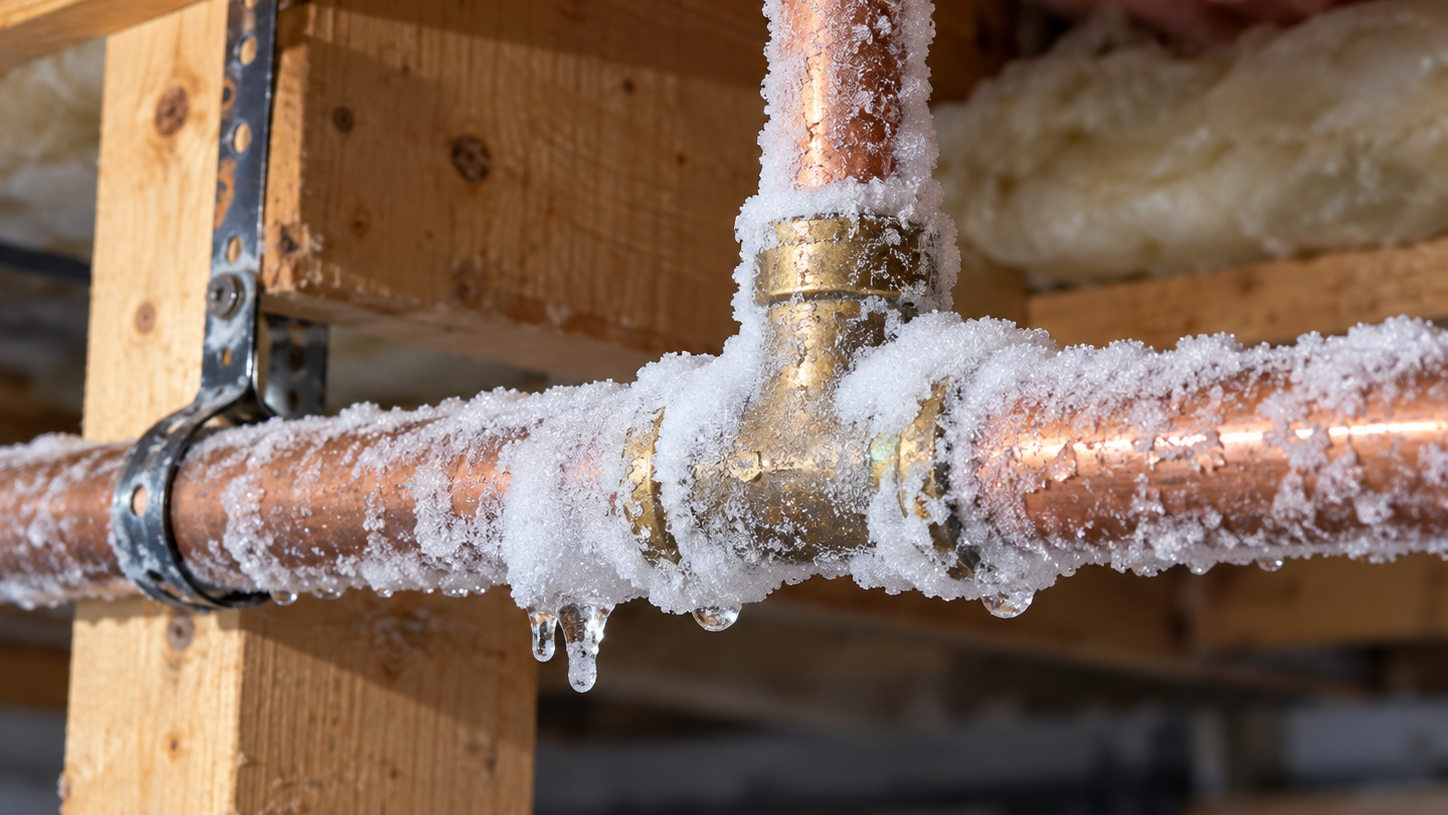

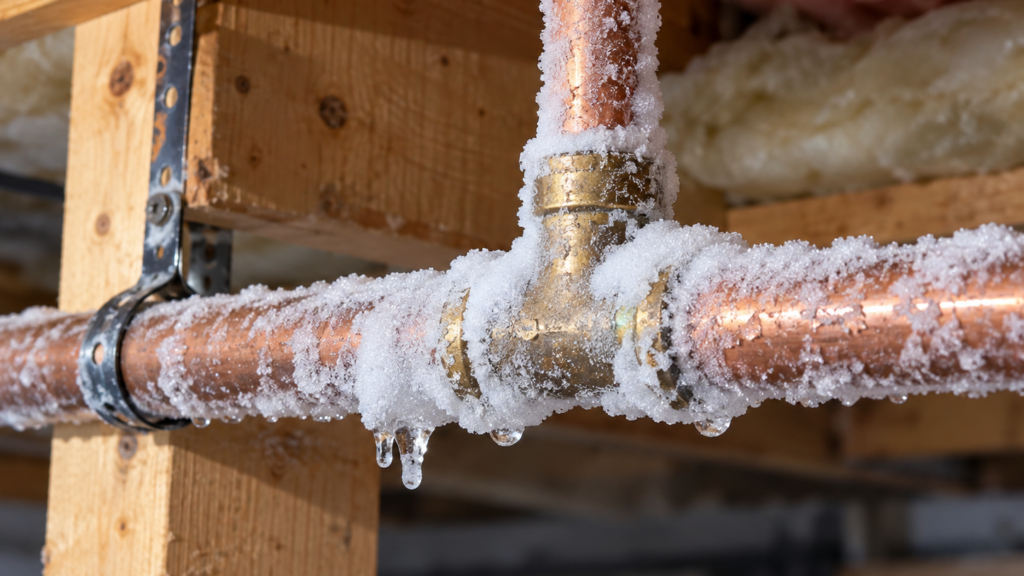
Pipes can burst in winter because water expands when it freezes. That expansion creates pressure inside the plumbing, and enough pressure can cause metal or plastic pipes to break.
The biggest risk is usually in plumbing exposed to colder conditions, especially pipes in garages, crawl spaces, attics, basements, cabinets, and exterior walls with limited insulation.
That matters in Central and Eastern Pennsylvania, where periods of freezing weather can expose weak points in home plumbing.
The good news is that several practical steps can reduce the chance of frozen and damaged pipes.
Why does freezing water cause pipes to burst?
Water expands as it freezes, but the break does not necessarily happen exactly where the ice first forms.
As ice blocks part of a water line, pressure can build between the blockage and a closed faucet or other part of the plumbing system. That pressure can eventually damage the pipe.
Any pipe material can be affected when conditions allow water inside to freeze. The more useful question for a homeowner is therefore not simply, “What type of pipe do I have?” It’s, “Where does my plumbing run through areas that get especially cold?”
Those locations deserve attention before temperatures drop.
Which pipes are most likely to freeze?
Pipes in unheated or poorly insulated areas are usually the most vulnerable.
Several common locations include:
- basements and crawl spaces;
- attics;
- garages;
- kitchen and bathroom cabinets;
- plumbing along exterior walls;
- outdoor hose connections and other exposed exterior lines.
Older Pennsylvania homes may also have plumbing routed through spaces that were not originally designed around modern insulation or conditioned living areas. That does not mean an older home will automatically have frozen pipes, but it makes knowing the pipe route especially useful.
Walk through your home before a hard freeze and look for plumbing in cold utility areas, near foundation walls, or inside cabinets against exterior walls.
If you find lines that repeatedly become very cold each winter, Haller can help you evaluate whether insulation, repair, rerouting, or another solution makes sense.
How can you prevent pipes from freezing?
Focus on keeping vulnerable plumbing warmer and reducing exposure to severe cold.
Before freezing weather arrives, remove and drain outdoor hoses, protect exposed plumbing, add insulation where appropriate, and check water lines in unheated spaces.
During very cold weather:
- Keep garage doors closed when water supply lines run through the garage.
- Open kitchen and bathroom cabinet doors so warmer room air can reach plumbing.
- Let cold water drip from a faucet served by exposed piping.
- Avoid dropping the thermostat sharply overnight during severe cold.
- Keep heat on when you are away from home in winter.
The Red Cross recommends leaving a home at no lower than 55°F when you are away during cold weather.
A dripping faucet is not a permanent fix for poorly protected plumbing. Think of it as a temporary cold-weather measure for a line that is particularly exposed.
If the same section freezes every winter, review the underlying plumbing rather than relying on the same emergency workaround each time.
Does pipe insulation really help?
Insulation can help vulnerable pipes retain more heat, particularly in basements, crawl spaces, attics, garages, and other colder parts of a home.
The Red Cross recommends insulation for exposed hot and cold water piping and identifies pipe sleeves and listed heat-tape or heat-cable products as possible approaches when used correctly.
The important part is choosing a product and installation method appropriate for the pipe and location.
Some plumbing may also be vulnerable because of where it is routed. In those cases, insulating the line may be one option while relocating or otherwise protecting it may provide a more durable solution.
Unsure of the best approach? Review your options with a plumber from Haller to separate a simple insulation project from a plumbing problem that needs a different fix
How can you tell if a pipe may already be frozen?
A faucet that suddenly produces only a trickle, or no water at all, during freezing weather is one common warning sign of a frozen pipe. Exterior walls and the point where the water service enters the home are common areas to investigate.
Other clues can include an unusually cold exposed pipe or loss of flow at one fixture while other plumbing still works.
If you suspect freezing, avoid forcing the situation with unsafe heating methods.
A frozen pipe may already be damaged even if a leak is not immediately visible. Water can begin escaping as the ice thaws and normal pressure returns.
Know where your main water shutoff is before you begin dealing with a frozen line. If the pipe has split, shutting off the water quickly can help limit additional water release.
How should a frozen pipe be thawed safely?
Use gentle heat and never use an open flame.
The Red Cross recommends keeping the affected faucet open and applying heat with methods such as an electric heating pad, hair dryer, towels soaked in hot water, or another appropriate heat source. It specifically warns against blowtorches and other open-flame devices.
Work from the faucet side toward the frozen section so melting water has somewhere to flow.
Stop and call a licensed plumber when:
- you cannot find the frozen section;
- the pipe is inaccessible;
- you cannot thaw it safely;
- you see a split or leak;
- water begins escaping;
- more than one part of the plumbing appears affected.
If one pipe has frozen, check other faucets too. The same cold conditions may be affecting more than one line.
If the situation has already caused damage, Haller offers 24/7 emergency plumbing service
What should you do if a frozen pipe bursts?
Shut off the water supply as soon as it is safe to do so, then address any electrical or structural hazard before entering the affected area.
A burst pipe can release significant water once the frozen blockage melts or the line remains under pressure.
Do not enter standing water when energized electrical equipment, outlets, appliances, or wiring may be involved. If electrical equipment has been exposed to water, treat that as a separate safety concern.
After the immediate water flow is controlled, the damaged section of pipe needs repair before normal service is restored.
The repair itself is only part of the decision. It is also worth identifying why that particular pipe froze. Otherwise, the same exposure can create another problem during the next severe cold spell.
What should Pennsylvania homeowners check before the next freeze?
Start with the plumbing you can see and the spaces you know stay cold.
A quick prevention check should answer four questions:
- Are outdoor hoses disconnected and drained?
- Are exposed pipes in unheated areas protected?
- Do any water lines run through a garage, crawl space, attic, basement, or exterior wall?
- Has the same pipe frozen before?
Central and Eastern Pennsylvania homes vary widely in age and layout. One house may have exposed basement plumbing, while another has water lines running through a garage or addition.
That is why one careful walkthrough is more useful than treating every home the same.
If you find a pipe that freezes repeatedly, a leak after thawing, or plumbing you cannot safely access, schedule plumbing service with Haller before the next cold stretch.
Frequently Asked Questions
Why do pipes burst in winter?
Pipes can burst in winter because water expands as it freezes, creating pressure inside the plumbing. That pressure can become strong enough to break metal or plastic pipe.
The most vulnerable pipes are often those exposed to severe cold or located in unheated areas. Preventing the water from freezing in the first place is the most useful protection.
Which pipes are most likely to freeze?
Pipes in unheated or poorly insulated areas are especially vulnerable to freezing. Basements, crawl spaces, attics, garages, kitchen cabinets, outdoor lines, and plumbing along exterior walls are common risk locations.
Pennsylvania homeowners should pay particular attention to water lines in parts of the house that feel noticeably colder than normal living areas.
Should I let my faucet drip when temperatures fall below freezing?
Allowing a small amount of cold water to drip can help protect a faucet served by exposed piping during very cold weather. Moving water can help reduce freezing risk.
It is a temporary cold weather precaution rather than a long-term fix for plumbing that freezes repeatedly.
What temperature should I leave my house at when I travel in winter?
The American Red Cross recommends leaving the heat on and setting the thermostat no lower than 55°F when you are away during cold weather.
That recommendation helps keep the building and vulnerable plumbing warmer while the home is unoccupied. Individual homes differ, so exposed plumbing may still need insulation or other protection.
How do I know if a pipe is frozen?
A faucet that produces only a trickle during freezing weather can be a sign of a frozen pipe. Check likely locations such as exterior walls or where the water service enters the building.
If one line is frozen, check other faucets because the same cold conditions may affect additional pipes.
Can I use a torch to thaw a frozen pipe?
An open flame should not be used to thaw a frozen pipe. Do not use blowtorches, kerosene or propane heaters, charcoal stoves, and other open-flame methods.
Safer options include controlled electric heat or hot towels on an accessible pipe. If the pipe cannot be reached or thawed safely, call a licensed plumber.
What should I do if a frozen pipe starts leaking?
A leaking frozen pipe should be treated as a plumbing problem that needs prompt attention. Shut off the water supply when it is safe to do so and avoid standing water when electrical equipment or wiring may be involved.
Once the water is controlled, the damaged pipe needs repair before normal service resumes. The cause of the freeze should also be addressed so the same section is less likely to freeze again.
Does pipe insulation prevent frozen pipes?
Pipe insulation can reduce freezing risk by helping exposed plumbing retain heat, but it cannot guarantee that a pipe will never freeze. The Red Cross recommends insulating exposed water lines and identifies pipe sleeves and properly listed heating products as possible options.
Repeated freezing may mean the pipe needs a more permanent change in protection or routing.